Understanding Spatial Value in Local Business Acquisitions
Evaluating a commercial property or retail footprint is a critical step for anyone looking to acquire an established business in Allen County. Long before initiating formal conversations with intermediaries or sellers, prospective owners must conduct detailed independent research on the physical layout and location quality of the target enterprise. This initial due diligence ensures that the business is positioned to sustain its revenue model and that the local market can support its continued operations under new ownership. Understanding how location details impact cash flow is essential for mastering market trends. When analyzing a potential retail, service, or distribution business for sale Fort Wayne, buyers must look beyond the profit and loss statements to examine how the physical site interacts with the surrounding commercial environment.
Evaluating Traffic Patterns and Customer Concentration
A business location must align with its target customer demographics and daily habits. For consumer-facing businesses, buyers analyze local traffic flows along major thoroughfares such as Coliseum Boulevard, Lima Road, or Jefferson Boulevard. It is not just about the total volume of vehicles or pedestrians, but the nature of that traffic. A high-speed commuter corridor may yield thousands of drive-by views daily but offer minimal conversion if vehicle access is restricted or inconvenient. Conversely, pedestrian-oriented shopping nodes or mixed-use corridors might offer lower overall traffic counts but yield higher conversion rates due to slower travel speeds and deliberate consumer intent. Prospective owners should observe the site at different times of day to verify if customer volume matches the operational hours of the business.
Lease Exposure, Infrastructure, and Zoning
Physical locations come with legal and financial obligations that dictate long-term profit margins. When reviewing a business listing, buyers must assess the underlying lease structure. A triple-net lease might expose the buyer to escalating property taxes, maintenance costs, and insurance premiums, whereas a gross lease provides more predictability but potentially higher base rent. This is a foundational step in planning a successful property investment. Furthermore, local zoning laws must be cross-referenced with the operational goals of the business. Buyers should confirm that current operations comply with municipal regulations and that any planned expansions or service additions are permitted under existing zoning codes. Outdated infrastructure, inadequate electrical capacity, or lack of proper ventilation can lead to unexpected capital expenditure immediately after purchase.
Access Logistics: Parking, Suppliers, and Employees
An excellent location is useless if it is difficult to access. Buyers must evaluate the accessibility of the site for three distinct groups: customers, suppliers, and employees. For customer access, parking availability is key. In dense urban areas, buyers should check the proximity of public parking garages or municipal lots. In suburban settings, a dedicated parking lot with clear ingress and egress is essential. Supplier routes must also be examined, particularly for businesses that rely on frequent deliveries. Narrow alleys or restrictive loading zones can complicate logistics and increase shipping fees. Finally, employee transit must be considered. A site that is accessible via public transportation or located near affordable housing options makes recruitment and retention significantly easier, reducing long-term operational friction.
Market Timing and Acquirer Readiness
The physical location of a business must be viewed in tandem with broader market indicators. Regional development plans, infrastructure improvements, and commercial zoning shifts can dramatically alter the value of a property over a multi-year horizon. Acquirers must evaluate whether they are entering a stable market or a transitioning corridor. Understanding local transaction volume and the motivations of exiting owners provides critical context for buyers. Keeping track of the local market environment is essential for timing a transaction effectively. Buyers should consult a comprehensive Fort Wayne acquisition market update to assess current buyer demand, interest rate trends, and overall seller activity before committing to a purchase. Aligning location quality with macro-level market trends is the key to minimizing risk during a business transition.
Analyzing Competitor Density and Geographic Moats
A key aspect of location analysis is understanding local market saturation. Buyers should map direct and indirect competitors within a five-mile radius of the target business. A high concentration of similar businesses might indicate strong local demand, but it also increases pressure on profit margins. Conversely, an area with no competitors might suggest a lack of demand or restrictive zoning that prevents similar enterprises from operating. Evaluating these geographic barriers helps buyers determine if the target business has a sustainable local moat. Establishing a strong physical presence in a well-defended corridor provides a significant competitive advantage that is difficult for new entrants to disrupt. This local market insight is vital for verifying whether a business listing is positioned for long-term growth.
Essential Location Assessment Checklist
To ensure a comprehensive review, buyers can use the following checklist when evaluating a target site:
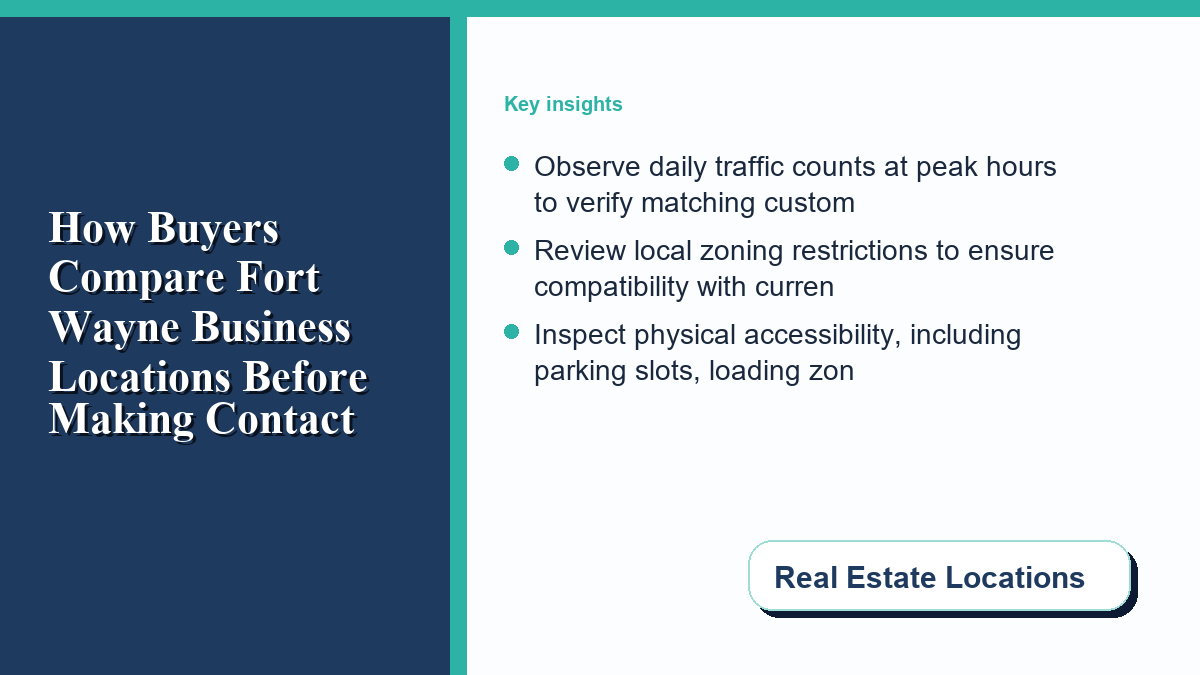
- Observe daily traffic counts at peak hours to verify matching customer patterns.
- Review local zoning restrictions to ensure compatibility with current and future operations.
- Inspect physical accessibility, including parking slots, loading zones, and pedestrian pathways.
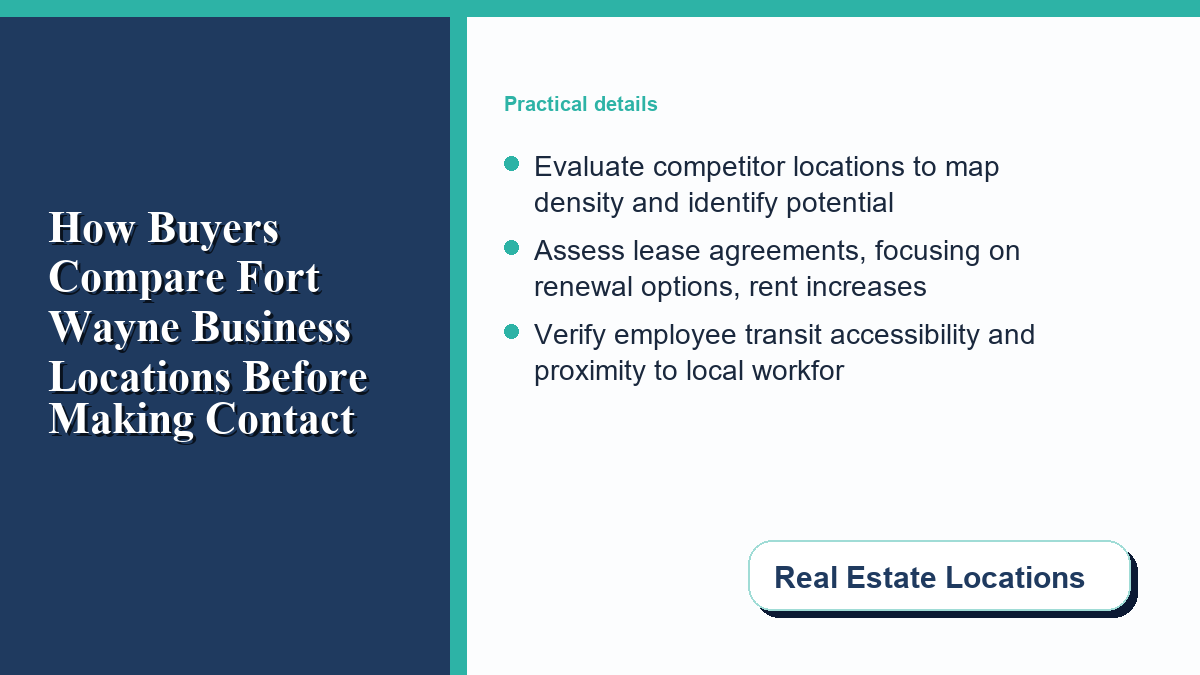
- Evaluate competitor locations to map density and identify potential market saturation.
- Assess lease agreements, focusing on renewal options, rent increases, and utility responsibilities.
- Verify employee transit accessibility and proximity to local workforce pools.
Frequently Asked Questions
How does zoning impact a business acquisition?
Zoning laws regulate what activities can occur on a property. If the business plans to introduce new services, alter the physical layout, or expand operating hours, zoning restrictions could block those changes. Buyers should verify zoning compliance with local planning offices before closing.
Why should buyers analyze competitor proximity?
Analyzing competition helps determine market demand and potential price pressure. A high concentration of direct competitors nearby can squeeze margins, whereas a location with balanced competitor density suggests a sustainable client base.
What is the difference between a gross lease and a triple-net lease?
A gross lease includes building expenses in the rent payment, providing predictable monthly costs. A triple-net lease requires the tenant to pay base rent plus property taxes, insurance, and maintenance costs, which can fluctuate annually.
Disclaimer: This article is for informational purposes only and does not constitute legal, tax, valuation, or financial advice. Readers should consult qualified professionals before making any business acquisition or property investment decisions.

0 Comments